Decoding Gen Z Slang: 10 Phrases for Spring 2026
Mastering 10 essential Gen Z slang phrases by Spring 2026 is crucial for anyone looking to bridge the communication gap and understand contemporary youth culture.
The linguistic landscape is constantly shifting, and nowhere is this more apparent than in the rapid evolution of youth vernacular. For anyone aiming to stay current, understanding and integrating new terms is key. This article is your essential guide to decoding Gen Z’s latest slang: 10 phrases you need to know by Spring 2026, ensuring you’re not left scratching your head in conversations.
The ever-evolving lexicon of Gen Z
Gen Z, often dubbed digital natives, has a unique way of communicating that is deeply intertwined with internet culture, memes, and social media platforms. Their language is dynamic, constantly adapting to new trends and experiences, making it challenging for those outside the generation to keep up. This linguistic fluidity isn’t just about sounding cool; it reflects a broader cultural shift towards rapid information exchange and a desire for authentic, concise expression.
Understanding this evolution is more than just learning new words; it’s about grasping the underlying cultural nuances that give these terms their meaning. From expressing approval to describing complex emotions, Gen Z slang often serves as a shortcut, conveying a lot with very little. This efficiency is a hallmark of digital communication, where character limits and quick interactions reign supreme. As we approach Spring 2026, certain phrases are solidifying their place in the lexicon, becoming indispensable for truly connecting with this demographic.
Why keeping up with slang matters
- Enhanced Communication: Bridging generational gaps and fostering better understanding.
- Cultural Relevance: Staying informed about current trends and social dynamics.
- Professional Edge: Relevant for marketers, educators, and anyone working with younger audiences.
- Personal Connection: Building rapport and demonstrating an open mind in social settings.
The speed at which new slang emerges and spreads is unprecedented, largely thanks to platforms like TikTok, Instagram, and X (formerly Twitter). A phrase can go from niche inside joke to mainstream phenomenon in a matter of weeks, only to be replaced by something new just as quickly. This rapid cycle demands continuous attention and a willingness to learn, highlighting the importance of resources like this guide to stay current.
In conclusion, the fluid nature of Gen Z’s language is a testament to their adaptability and creativity. Staying informed about their evolving lexicon is not merely a linguistic exercise but a doorway into understanding their unique perspective and cultural landscape. Embracing these new terms allows for more meaningful interactions and a deeper appreciation of contemporary communication styles.
Cracking the code: 10 essential phrases for Spring 2026
As we edge closer to Spring 2026, certain phrases have cemented their status as core components of Gen Z’s everyday vocabulary. These aren’t just fleeting trends; they represent established ways of expressing ideas, emotions, and reactions within their social circles. Mastering these 10 phrases will equip you with the linguistic tools necessary to navigate conversations and social media feeds with greater confidence and comprehension.
Each term carries a specific weight and context, often derived from internet humor, viral moments, or simplified expressions of more complex ideas. Their usage can vary slightly by region or subculture, but the core meaning remains consistent. This section will break down each phrase, offering definitions, usage examples, and insights into their origins, ensuring you grasp not just the ‘what’ but also the ‘why’ behind these popular terms.
1. Rizz
Definition: Short for ‘charisma,’ rizz refers to one’s skill in charming or seducing another person, particularly through verbal communication. It’s about having a magnetic personality that attracts others effortlessly.
- Usage Example: “He’s got serious rizz; everyone falls for his jokes.”
- Origin: Popularized on TikTok and among streamers, it quickly became a widespread term for romantic charm.
2. Bet
Definition: An affirmation meaning ‘yes,’ ‘okay,’ ‘agreed,’ or ‘for sure.’ It signifies acceptance, confirmation, or a challenge accepted.
- Usage Example: “Want to grab coffee later?” “Bet.”
- Origin: Derived from betting culture, indicating a confident agreement or acceptance of a proposition.
3. Cap / No Cap
Definition: ‘Cap’ means to lie or exaggerate. ‘No cap’ means ‘no lie,’ ‘for real,’ or ‘no exaggeration.’ It’s used to emphasize truthfulness.
- Usage Example: “I caught a huge fish, no cap!” or “That story sounds like cap.”
- Origin: Rooted in African American Vernacular English (AAVE), gaining widespread internet popularity.
4. Simp
Definition: A person, typically male, who is overly eager to please someone they are romantically interested in, often at the expense of their own self-respect. It implies being subservient or desperate for attention.
- Usage Example: “He’s simping hard over her, always buying her gifts.”
- Origin: Resurfaced from older slang, revitalized on TikTok and gaming communities to describe excessive devotion.
5. Sus
Definition: Short for ‘suspicious’ or ‘suspect.’ Used when something or someone seems questionable, untrustworthy, or out of place.
- Usage Example: “That guy’s behavior is really sus.”
- Origin: Popularized by the video game Among Us, where players identify ‘sus’ individuals.
6. Mid
Definition: Describes something as mediocre, average, or disappointing. It’s a dismissive term for something that isn’t particularly good but isn’t terrible either.
- Usage Example: “That new movie was pretty mid, honestly.”
- Origin: Gained traction in online review culture and social media to express lukewarm opinions.
7. Slay
Definition: To do something exceptionally well, to impress, or to look fantastic. It’s a term of strong approval and admiration.
- Usage Example: “Her outfit for the party? She totally slayed!”
- Origin: Has roots in LGBTQ+ ballroom culture, widely adopted across mainstream social media.
8. Vibe Check
Definition: An informal assessment of a person’s mood, emotional state, or the general atmosphere of a situation. It can be a literal question or an internal evaluation.
- Usage Example: “Just doing a quick vibe check on everyone before the meeting.”
- Origin: Emerged as a meme and quickly became a casual way to gauge emotional resonance.
9. Main Character Energy
Definition: Refers to someone who acts as if they are the protagonist of their own life story, embracing their individuality, confidence, and uniqueness. It’s about living authentically and unapologetically.
- Usage Example: “She walks into every room with main character energy.”
- Origin: Inspired by cinematic storytelling and self-empowerment trends on social media.
10. Ghosting
Definition: The act of suddenly ending all communication with someone without explanation, particularly in dating or friendships. It involves disappearing from someone’s life without a trace.
- Usage Example: “I thought we had a great date, but he totally ghosted me.”
- Origin: A term that gained prominence with the rise of online dating and digital communication, describing a specific social phenomenon.
In summary, these 10 phrases represent a snapshot of Gen Z’s current linguistic landscape. Incorporating them into your vocabulary demonstrates an effort to connect and understand, fostering more authentic interactions in a rapidly evolving digital world.
The cultural impact of Gen Z slang
Gen Z’s slang doesn’t just exist in a vacuum; it profoundly impacts broader culture, influencing everything from advertising campaigns to mainstream media. The rapid adoption of these terms by brands and public figures highlights their pervasive reach and the generation’s significant cultural footprint. This influence underscores the importance of staying informed about these linguistic trends, as they often signal shifts in societal values, humor, and communication norms.
The speed at which these terms permeate different spheres is unprecedented, largely due to the interconnected nature of digital platforms. A phrase coined in a niche online community can become universally recognized within weeks, transcending geographical and social boundaries. This phenomenon speaks to the power of shared digital experiences and the collective creation of meaning that defines Gen Z’s cultural output.
Slang as a marker of identity and belonging
- Community Building: Creates a shared language that strengthens group bonds.
- Exclusivity: Can act as a barrier, distinguishing insiders from outsiders.
- Self-Expression: Provides creative and concise ways to convey identity.
Beyond its immediate impact, Gen Z slang often reflects deeper societal conversations. Terms like ‘ghosting,’ for instance, encapsulate modern dating anxieties, while ‘main character energy’ speaks to a generation’s desire for self-empowerment and authenticity. These phrases are not merely arbitrary words; they are linguistic tools that help Gen Z articulate their experiences and navigate the complexities of their world.
The cultural impact of Gen Z slang extends beyond mere vocabulary; it shapes how ideas are formed, shared, and understood. By understanding these terms, one gains a clearer window into the values, humor, and communication styles that define this influential generation, proving that language is indeed a powerful mirror of society.
Navigating digital communication with Gen Z
Communicating effectively with Gen Z in the digital age requires more than just knowing a few slang terms; it demands an understanding of their preferred communication channels and unspoken etiquette. This generation grew up with smartphones and social media as extensions of themselves, making digital interactions as natural and nuanced as face-to-face conversations. Adapting your communication style to align with these preferences is crucial for clear and respectful engagement.
Their reliance on visual cues, emojis, and concise messaging means that long, formal texts or emails might be less effective than shorter, more direct communications. They value authenticity and transparency, often preferring informal language that feels genuine rather than overly polished or corporate. This approach fosters a sense of connection and trust, which is paramount in their digital interactions.
Tips for effective digital dialogue
- Be concise: Get straight to the point without excessive fluff.
- Use visuals: Emojis, GIFs, and short videos can enhance understanding.
- Show authenticity: Avoid overly formal language; be genuine.
- Respect their platforms: Engage where they are active, like Instagram DMs or TikTok comments.
One key aspect of navigating digital communication is understanding the context-specific nature of their language. A term used casually in a group chat might not be appropriate in a professional setting. Being observant and adaptable to different digital environments is vital. Moreover, the speed of response can also be a factor; Gen Z often expects quicker replies in informal settings, reflecting the instantaneity of their digital world.
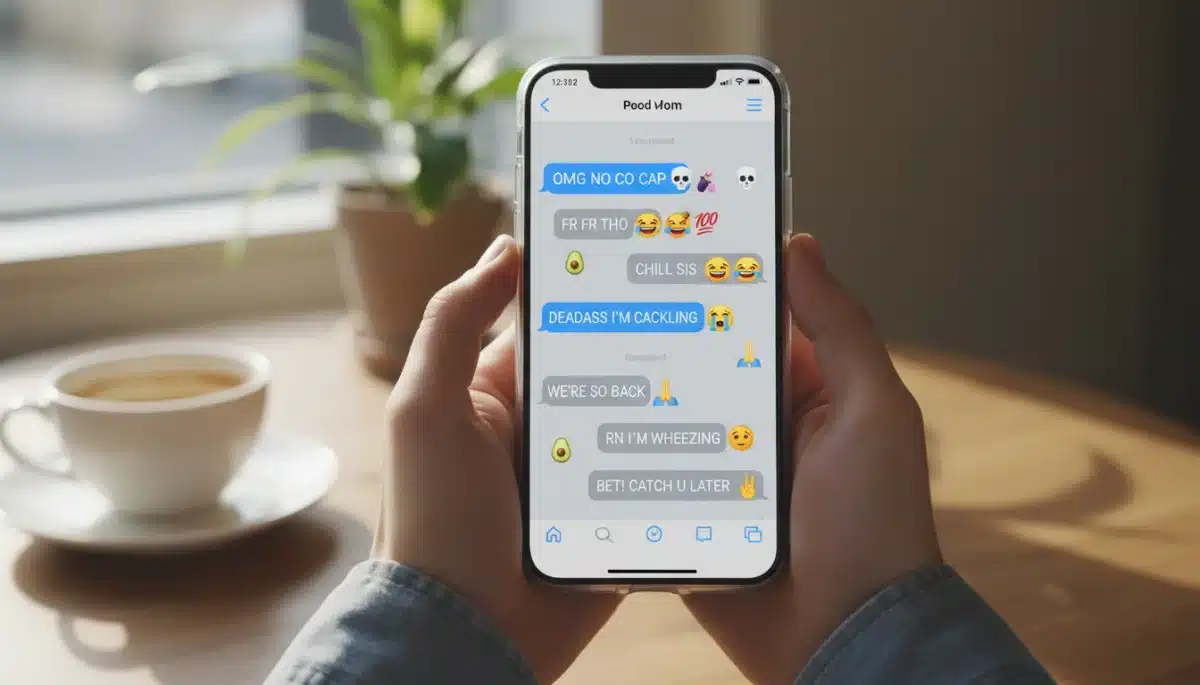
Ultimately, successfully navigating digital communication with Gen Z means being mindful of their communication habits, respecting their linguistic innovations, and embracing the informal yet effective style that defines their online interactions. It’s about meeting them where they are and speaking their language, both literally and figuratively.
The future of slang: what to expect beyond 2026
Predicting the exact trajectory of slang beyond 2026 is akin to predicting the weather in a hurricane – it’s constantly shifting and influenced by countless variables. However, certain trends and patterns suggest how Gen Z’s language might continue to evolve. The accelerating pace of digital culture, the rise of new social platforms, and global interconnectedness will undoubtedly shape future linguistic innovations, making adaptability a permanent requirement.
We can anticipate a continued emphasis on brevity and visual communication. As attention spans shorten and content consumption becomes more fragmented, slang will likely become even more condensed, potentially incorporating more symbols, abbreviations, and even sound bites. The influence of global internet communities will also grow, leading to a richer tapestry of loanwords and cultural fusions from various linguistic backgrounds.
Emerging trends in linguistic evolution
- Hyper-localization: Slang becoming more specific to smaller online communities.
- Visual integration: Increased reliance on emojis, GIFs, and short video clips as part of verbal communication.
- Global fusion: More words and phrases adopted from diverse international internet cultures.
- Ephemeral nature: Terms having even shorter lifespans as trends accelerate.
The intersection of artificial intelligence and language also presents an intriguing unknown. While AI might help standardize some communication, it could also paradoxically fuel the creation of more niche, human-centric slang as a way for Gen Z to maintain distinct cultural identities. The human desire for creative expression and belonging will always find new linguistic outlets, regardless of technological advancements.
In conclusion, the future of slang promises to be as dynamic and unpredictable as Gen Z itself. Staying attuned to the forces driving linguistic change – technology, global culture, and the innate human need for expression – will be key to understanding the evolving vernacular beyond 2026 and appreciating the continuous innovation that defines modern communication.
Integrating Gen Z slang respectfully and effectively
While understanding Gen Z slang is valuable, integrating it into your own communication requires nuance and respect. Authenticity is paramount; using slang simply to appear ‘cool’ can often backfire, coming across as forced or inauthentic. The key is to use these terms naturally and appropriately, understanding their context and the social implications of their usage. It’s about enhancing communication, not mimicking a persona that isn’t genuinely yours.
Before using a new term, consider its origin and current connotations. Some slang terms, while widely used, may have roots in specific communities or carry subtle undertones that might be misinterpreted if used out of context. A little research and observation can go a long way in ensuring your usage is both respectful and effective. The goal is to connect, not to appropriate or alienate.
Best practices for using new slang
- Listen and observe first: Understand the context before using a term.
- Prioritize authenticity: Only use words that feel natural to your communication style.
- Avoid overuse: A sprinkle of relevant slang is more effective than a deluge.
- Be open to correction: If you misuse a term, be gracious and learn from it.
Furthermore, consider your audience. While Gen Z slang is prevalent among younger demographics, it might not be universally understood or appreciated across all age groups or professional settings. Tailoring your language to suit the specific conversation and individuals involved is a fundamental communication skill that extends to integrating new slang. The aim is always clarity and connection, not just demonstrating knowledge of trending terms.
Ultimately, integrating Gen Z slang effectively means approaching it with a learner’s mindset, valuing authenticity, and always prioritizing clear, respectful communication. It’s a tool for connection, not a performance, and when used thoughtfully, it can significantly enrich your interactions with this dynamic generation.
| Key Term | Brief Description |
|---|---|
| Rizz | Charisma or skill in charming someone. |
| No Cap | No lie; for real; no exaggeration. |
| Mid | Mediocre, average, or disappointing. |
| Slay | To do something exceptionally well; impress. |
Frequently asked questions about Gen Z slang
Gen Z slang evolves rapidly due to the influence of social media platforms and constant internet trends. New terms gain traction and spread globally within weeks, making the lexicon incredibly dynamic and responsive to current events and viral content. This fast pace reflects their digital-native communication habits.
Yes, learning Gen Z slang can significantly improve communication and understanding across generations. It helps bridge cultural gaps, fosters better relationships, and is particularly beneficial for professionals in fields like marketing, education, and media who interact with younger audiences regularly.
To use Gen Z slang authentically, prioritize understanding its context and meaning before incorporating it. Use terms sparingly and only when they feel natural to your communication style. Overusing or misusing slang can sound forced; authenticity and respect for the language’s origins are key.
Most Gen Z slang originates from various online communities, particularly on platforms like TikTok, X (formerly Twitter), Instagram, and gaming forums. Viral memes, popular streamers, and specific subcultures often act as incubators for new terms before they spread to a wider audience.
AI’s influence on future slang is an intriguing prospect. While it might standardize some communication, it could also paradoxically inspire more niche, human-created slang as a way for Gen Z to maintain unique cultural identities. The human desire for creative expression will likely continue to drive linguistic innovation.
Conclusion
Staying current with decoding Gen Z’s latest slang: 10 phrases you need to know by Spring 2026 is more than a trendy endeavor; it’s a vital step in fostering effective communication and understanding across generations. The dynamic nature of their language reflects a constantly evolving digital culture, where authenticity, brevity, and shared experiences shape how we connect. By embracing these linguistic shifts, we gain a deeper insight into the minds of digital natives, ensuring our interactions are not only clearer but also more meaningful and relevant in the ever-changing landscape of modern communication.